
Vehicle Warning Signs Mooresville, North Carolina Drivers Should Not Ignore
Table of Contents
- Warning Signs Drivers Often Miss
- Understanding Dashboard Warning Lights
- What Unusual Sounds Can Mean
- Why Smells and Leaks Matter
- Changes in Handling and Performance
- When to Stop Driving
- Why Diagnosis Comes Before Repair
- Preparing for a Repair Visit
- Reducing Surprise Repairs
From routine trips around Mooresville to longer drives on I-77 or around Lake Norman, a vehicle can develop problems gradually rather than failing without notice. A new vibration, smell, warning light, or puddle beneath the car may be an early clue that one system needs attention. Understanding those clues can help drivers make safer decisions before a minor concern becomes a roadside problem.
When a symptom continues, changes, or appears alongside a warning light, scheduling auto repairs can help identify the actual cause instead of relying on guesswork. The goal is not to assume every noise is a major failure. It is to recognize when a change deserves a closer look.
Warning Signs Drivers Often Miss
A vehicle may still start, steer, and drive while a problem is developing. Rough cold starts, slower acceleration, a new shake at highway speed, reduced fuel economy, repeated stalling, or a change in braking feel can all be useful details. Pay attention to when the issue occurs. Does it happen only after rain, while turning, during braking, after the engine warms up, or at a certain speed?
Local driving can make these details especially useful. Stop-and-go traffic, wet roads, summer heat, and hard impacts with potholes or curbs can reveal tire, suspension, cooling, or braking concerns that may not be obvious during a short driveway check. If a concern is persistent, a car mechanic can use the symptoms, along with an inspection and testing, to narrow down the source.
Understanding Dashboard Warning Lights
Dashboard symbols differ by manufacturer, so the owner’s manual is always the best reference for a particular vehicle. In general, red lights often indicate a condition requiring immediate attention, while amber or yellow lights call for prompt service or inspection. Green, blue, and white indicators commonly show that a feature is active, although the exact meaning still depends on the vehicle.
Oil-pressure and engine-temperature warnings deserve urgent attention because inadequate lubrication or overheating can damage an engine. A battery light can indicate a charging-system issue. Brake, ABS, tire-pressure, and check-engine lights each point to different systems, and a code or symbol alone does not identify the failed part. Drivers can review common dashboard warning light meanings while still checking their own manual for model-specific instructions.
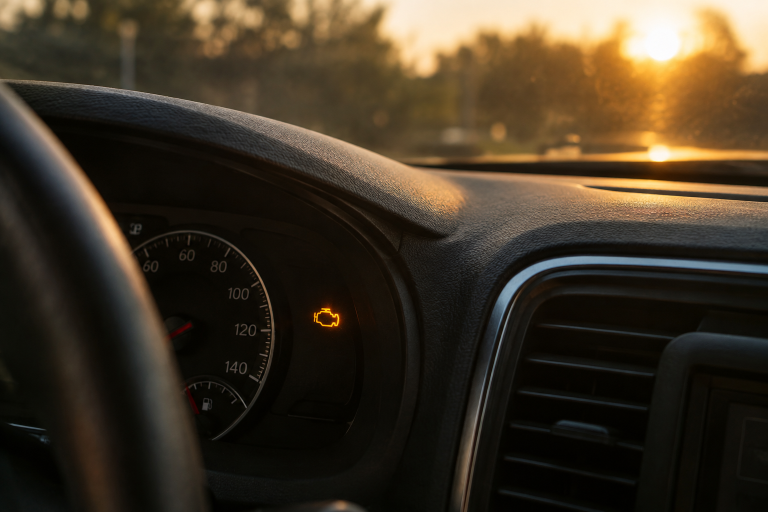
A flashing check-engine light, especially with rough running or loss of power, should be treated more urgently than a steady light. Pull over safely if the vehicle is overheating, smoking, losing braking ability, or running severely rough. Turning a warning light off with a scanner does not repair the underlying issue if the fault remains.
What Unusual Sounds Can Mean
Listen for Changes, Not Just Volume
A sound can provide a useful starting point, but it is not a diagnosis by itself. Squealing may involve a belt, brake components, or another rotating part. Grinding while braking can indicate brake wear or damage. Clicking during turns can be associated with drivetrain or steering-related parts, while humming that rises with road speed may come from tires, wheel bearings, or other rotating components.
Make a quick note of whether the sound changes with engine speed, vehicle speed, steering angle, braking, or road surface. For example, a noise that occurs only when applying the brakes points in a different direction than one that gets louder with speed, even when the vehicle is coasting.
Why Smells and Leaks Matter
New odors should not be ignored. A sweet smell can be associated with coolant, an oily smell may come from fluid contacting hot components, and a fuel smell can point to a condition that needs timely attention. A burning odor, visible smoke, or a strong fuel smell are reasons to park safely, turn off the vehicle when appropriate, and arrange further evaluation rather than continuing the trip.
Fresh spots beneath the vehicle can also be helpful clues. Place clean cardboard under a parked vehicle to see where a leak lands and whether it returns. Do not touch unknown fluids, open a hot cooling system, or crawl underneath a vehicle that is supported only by a jack.
Changes in Handling and Performance
Pulling to one side, steering-wheel vibration, bouncing after bumps, uneven tire wear, or a soft brake pedal can affect vehicle control. Poor acceleration, rough idle, delayed shifting, or repeated stalling may involve the engine, transmission, fuel system, or electronic controls. These symptoms should be noted after tire service, a hard road impact, or major temperature changes, but they should not be assumed to have one simple cause.
When to Stop Driving
- Stop driving when safe: Smoke, an overheating warning, a major fluid leak, loss of braking response, or a flashing check-engine light combined with rough operation.
- Arrange service soon: A steady warning light, worsening vibration, unusual shifting, repeated stalling, brake noise, or a tire-pressure warning that returns after inflation.
- Monitor closely: A one-time minor noise or a maintenance reminder with no changes in how the vehicle runs, while still following the vehicle’s maintenance schedule.
Why Diagnosis Comes Before Repair
Modern vehicles often need both electronic and mechanical testing. A diagnostic trouble code can indicate the system is reporting an issue, but it may not identify the failed component. A careful process can include a road test, visual inspection, fluid check, scan data, and targeted electrical or mechanical tests. Asking what was found, what was tested, and why a repair is recommended helps make the conversation clearer.
Preparing for a Repair Visit
- Write down when the symptom first appeared and how often it occurs.
- Take photos of warning lights, leaks, tire damage, or smoke when it is safe to do so.
- Bring recent maintenance and repair records, along with the current mileage.
- Mention recent tire work, road impacts, battery service, or changes in vehicle performance.
- Ask whether the concern is urgent, routine, or safe to delay briefly.
Reducing Surprise Repairs
Preventive care cannot eliminate every failure, but it can uncover developing concerns earlier. Follow the maintenance schedule for the specific vehicle, check tire pressure when tires are cold, inspect tread for uneven wear or damage, and keep basic records for oil changes, brake work, tires, and repairs. The National Highway Traffic Safety Administration also allows drivers to check for unrepaired safety recalls using a vehicle identification number or license plate information.
Small changes are worth noticing. By documenting symptoms, responding appropriately to urgent warnings, and seeking a proper diagnosis when a concern persists, Mooresville drivers can make more informed choices about vehicle safety and repair needs.